
The Central Bureau of Investigation (CBI), now leading the probe into the tragic Kolkata doctor rape and murder case, informed the Supreme Court on Thursday that the investigation was handed over to them on the fifth day after the crime, by which point, crucial evidence had already been tampered with. Representing the CBI, Solicitor General (SG) Tushar Mehta emphasized before the court, “By the time CBI took charge on Day 5, everything had been altered.”
The CBI presented its status report to the Supreme Court in response to a directive issued earlier in the week. They flagged discrepancies related to the date and time records provided by Kolkata Police and raised concerns over procedural lapses. According to the CBI, several important timelines were unclear, including inconsistencies in the Daily Diary (DD) entry made by Kolkata Police. Despite the entry being recorded at 10:10 am, the crime scene was not properly secured until late in the evening on the day of the crime, a significant delay that raised further suspicions about the handling of the case.
Solicitor General Mehta also brought to light the alleged financial irregularities involving the former principal of RG Kar Medical College, Sandip Ghosh, who resigned after the incident. The CBI informed the court that Ghosh had rented surveillance cameras for the medical facility instead of purchasing them, a questionable decision linked to his other illegal activities within the institution.
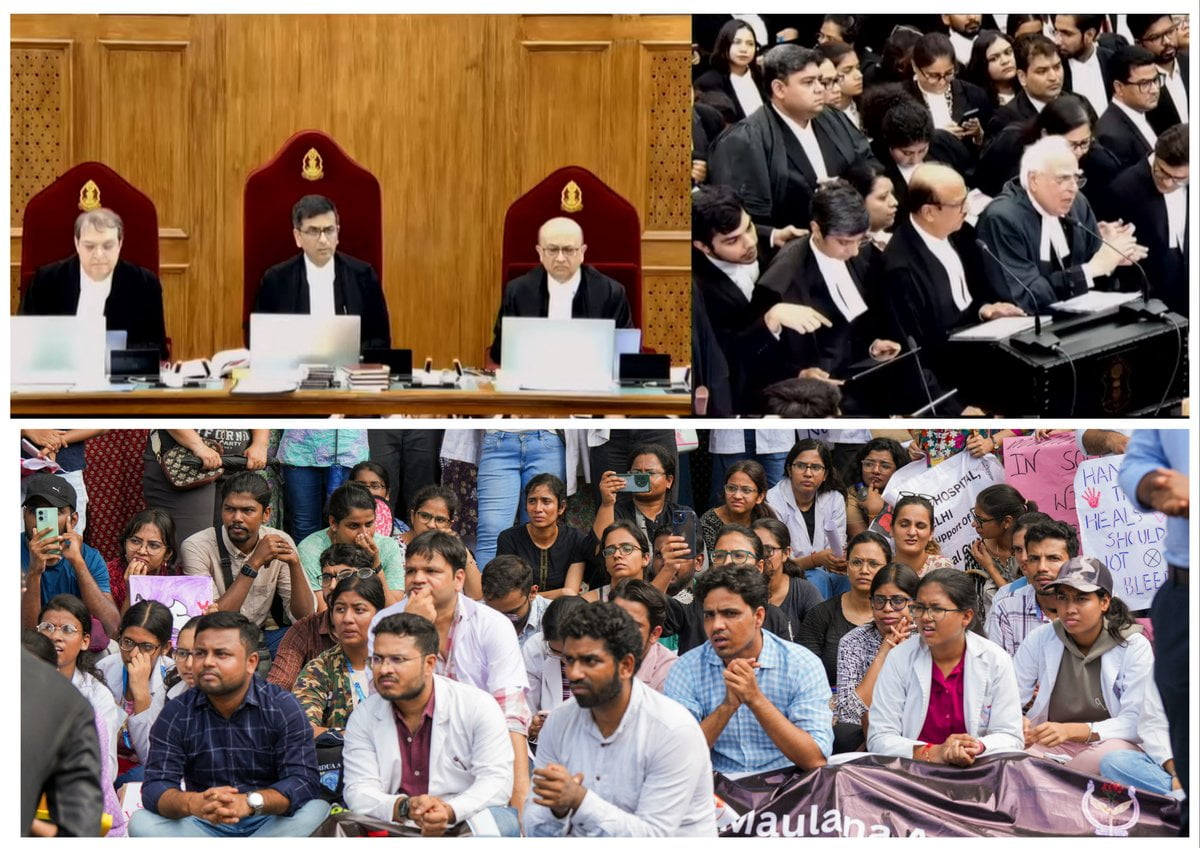
The CBI’s concerns about the crime scene management were echoed by the Supreme Court bench, which was headed by Chief Justice of India (CJI) DY Chandrachud. The bench questioned the irregularities in the timeline, especially the delay in securing the crime scene after the death of the young doctor was reported. Senior lawyer Kapil Sibal, representing the West Bengal government, revealed that the post-mortem had been conducted between 6:10 pm and 7:10 pm on the day of the incident. However, despite the body being taken for autopsy, it was only later that the crime scene was secured—a serious violation of standard procedures under the Code of Criminal Procedure (CrPC) in cases of unnatural deaths.
Justice JB Pardiwala, who was part of the Supreme Court bench, expressed grave concern over the handling of the case by the West Bengal authorities. He remarked, “In my 30 years of experience, I have never seen a procedure like this.” The court suggested that the delay in securing the crime scene—almost 18 hours after the crime had been committed—could have compromised critical evidence, further complicating the investigation.
The bench also raised questions about the actions of the Kolkata Police officer who was the first to report the incident. The court ordered that this officer appear before the bench at the next hearing to explain the decisions made after the discovery of the victim’s body. The Supreme Court criticized the manner in which the First Information Report (FIR) had been registered only after the body’s cremation, and the crime scene videography had been conducted only upon the insistence of senior doctors and the victim’s colleagues—indicating that suspicions of foul play were widespread from the outset.
The Supreme Court has taken a firm stance against the procedural lapses in this case, particularly questioning the role of the former RG Kar Medical College principal, Sandip Kumar Ghosh. The court suggested that there might have been an attempt to cover up the murder as a suicide, pointing to Ghosh’s questionable involvement in the case.
This case centers around the rape and murder of a young trainee doctor at Kolkata’s RG Kar Medical College and Hospital on August 9. Sanjoy Roy, a civic volunteer and the prime suspect in the crime, was arrested shortly after the incident. The horrific crime sparked national outrage, leading to widespread protests by doctors, students, and civil society groups demanding justice for the victim and greater accountability from the authorities. In the wake of these protests, the Calcutta High Court ordered that the investigation be handed over to the CBI on August 13, expressing a lack of confidence in the local police’s handling of the case.
Despite this transfer of investigation to the central agency, tensions remain high. On August 14, amidst ongoing protests, miscreants vandalized parts of the RG Kar Medical College and Hospital, further escalating the unrest surrounding the case. In light of these developments, the CBI’s investigation has become a focal point of public scrutiny, with many hoping that their involvement will bring much-needed clarity and justice to this deeply disturbing case.
The case has rattled the country, with widespread demands for swift justice and accountability. As the CBI continues its investigation under the watchful eye of the Supreme Court, the public remains hopeful that the culprits will be brought to justice and that the procedural flaws that have marred this case will be addressed to prevent future miscarriages of justice.


