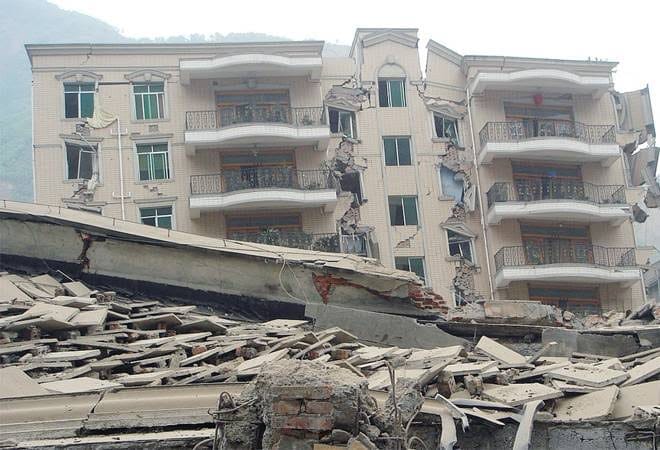
A Severe Magnitude‑8.8 Earthquake Strikes Russia’s Kamchatka Peninsula, Spurs Major Tsunami and Pacific‑wide Alert on July 30, 2025, a massive undersea earthquake registering magnitude 8.8 rattled the Pacific Ocean floor just off the eastern coastline of Russia’s Kamchatka Peninsula. The tremor originated at a shallow depth of approximately 19 km, located roughly 119 km east‑southeast of Petropavlovsk‑Kamchatsky, the region’s principal city of about 160,000 inhabitants. Authorities soon upgraded the initial estimate (8.0) to 8.8 once seismic data were fully analyzed .Immediate Impact and Local Damage within minutes of the quake, regions along Kamchatka’s coast began to flood as tsunami waves measured between 3 and 4 metres (10–13 feet) surged ashore. The port town of Severo‑Kurilsk—home to around 2,000 residents—experienced partial inundation, forcing emergency evacuations and emergency services’ swift response . Officials described minor injuries—some caused by people rushing outside, one person jumping from a window, and another injured inside a recently built airport terminal. Thankfully, all were reported in stable condition, and no fatalities had been confirmed as of yet .Reaction by Regional Administrators Kamchatka Governor Vladimir Solodov, via a Telegram video, declared it “the strongest tremor in decades” for the region . Emergency minister Sergei Lebedev emphasized the need for shoreline residents to immediately move inland as tsunami waves approached from the Pacific Ocean .Pacific‑wide Tsunami Warnings Issued became of the quake’s magnitude and shallow depth, tsunami threats were quickly detected across the Pacific basin. Countries including Japan, the United States (Hawaii, Alaska, the Pacific Coast), Canada, Mexico, Chile, Ecuador, New Zealand, Australia, Guam, and the Solomon Islands were placed under alerts or watches by their respective warning authorities .Japan — Still mindful of the 2011 Fukushima disaster — issued tsunami advisories projecting waves up to 3 metres could strike its northern and eastern coasts, extending down as far as Wakayama near Osaka. Nationwide, officials evacuated over 900,000 residents from vulnerable coastal zones. In Hokkaido, the first wave—about 30 to 40 cm—was confirmed by NHK, as people gathered on rooftops and camping tents in makeshift shelter while fishing vessels moved away from the shore .At the Fukushima nuclear power plant, workers were evacuated as a precaution. There were no reported anomalies or damage at any nuclear facility, according to Japan’s Chief Cabinet Secretary .United States and Pacific Territories — The U.S. Pacific Tsunami Warning Center issued alerts of potentially destructive waves exceeding 3 metres for parts of its Pacific territories, and 1–3 metre waves for Hawaii, Alaska, Chile, Ecuador, and Solomon Islands. A tsunami watch was extended to encompass Alaska’s Aleutians and the U.S. West Coast. The President posted an emergency advisory urging citizens to follow official instructions and avoid coastal zones .In Hawaii, coastal evacuations were ordered. The Honolulu Department of Emergency Management issued urgent directives: if seas rose, residents in low‑lying areas should move to higher ground or ascend to at least the fourth floor of multistory buildings .Seismic Aftershocks and Ongoing Monitoring Soon after the main quake, a powerful magnitude‑6.9 aftershock was recorded close to the same epicentral region. Local scientists warned that while aftershocks would continue, more powerful seismic events were not expected imminently. Geological experts pointed out that despite the quake’s high magnitude, shaking intensity felt by people was moderate, owing to the quake’s characteristics, such as rupture mechanism and depth .Historical Context Geologically, the Kamchatka Peninsula lies on the volatile Pacific Ring of Fire, where the Pacific Plate subducts beneath the Okhotsk Sea Plate. The region has a history of powerful earthquakes. Most notably, the 1952 Severo‑Kurilsk quake—magnitude ~9.0—generated tsunami waves up to 15–18 metres, killing over 2,300 people. Experts now regard the July 30, 2025 event as the strongest in the area since that 1952 catastrophe .Smaller but significant quakes in the region’s past include the 8.4 magnitude February 1923 event, which triggered an 8‑metre tsunami impacting Kamchatka and Hawaii, and the April 1923 quake, with waves reaching 30 metres in some locations. These earlier seismic events underscore the persistent tsunami risk in this part of the world .Current Situation and Outlook as of this writing, emergency services remain mobilized across Kamchatka and affected Pacific regions. Coastal evacuations are ongoing; damage assessments continue; and public agencies are issuing updates to ensure safety. Russia’s Ministry for Emergency Services has noted flooding at the fish processing facility and port area of Severo‑Kurilsk, along with structural impacts to a kindergarten—but confirmed no deaths or widespread destruction .Japan and other nations are continuing to monitor for further wave activity. Although initial waves were relatively small in many areas (e.g. 30–40 cm in Hokkaido), authorities remain cautious about the potential for larger secondary waves .Key Takeaway. A powerful magnitude‑8.8 quake struck on July 30, 2025 near Kamchatka, at a very shallow depth—causing tsunami waves up to 4 metres locally.2. Although shaken, the region avoided major casualties so far—thanks to early evacuations and effective alerts.3. Japan, the U.S., and multiple Pacific nations issued tsunami warnings, evacuations, and safety instructions.4. The seismic event is the strongest since the 1952 Severo‑Kurilsk earthquake, reaffirming the geological volatility of the Pacific Rim.5. Follow‑up monitoring is critical: aftershocks are ongoing but larger future quakes are not anticipated, though local authorities stress staying alert and prepared.
Tsunami Strikes Kamchatka Coast After Powerful 8.8-Magnitude Quake, Waves Reach 4 Metres